


Welding is one of the most important production processes that determines the quality and durability of manufactured products. Welding methods such as MIG, MAG, and TIG have their limitations – they require additional finishing, generate higher material consumption, and extend production time. In response to these challenges, companies are increasingly deciding to invest in more efficient technologies, such as fiber optic laser welders.
But will laser technology work in every company? In this article, we'll look at situations where investing in laser welders is most profitable.
Is a laser welder a good choice for your company?
Every investment must have economic justification and result from real production needs. And although not every company needs the most modern solutions, in some industries precision, speed, and lack of deformation in welds will be crucial for maintaining competitiveness. Let's check if a laser welder can improve production processes in your company.
What is fiber optic laser welding?
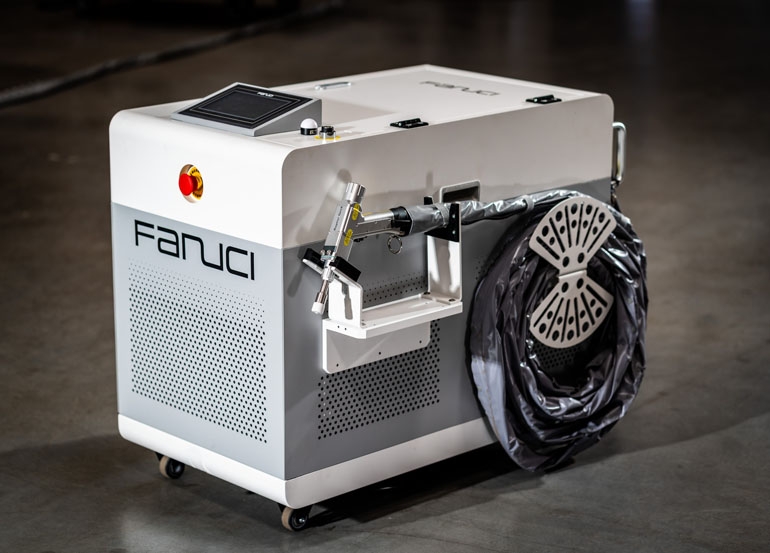
Laser welding is a modern technology for joining metals using a concentrated laser light beam. In the case of fiber optic welders, the laser source is an ytterbium (Yb) fiber, which allows for precise and durable welds with minimal impact on the material structure. Compared to MIG (Metal Inert Gas), MAG (Metal Active Gas), or TIG (Tungsten Inert Gas) welding methods, fiber optic laser offers higher quality welds without the need for additional finishing, the ability to join different types of materials, and radically accelerates welding time.
Read more about laser welding technology here: Laser Welding Guide - Everything You Need to Know
When is it worth considering investing in a fiber optic laser welder?
Poor weld quality, rising production costs, shortage of workers? Let's see what production problems may signal the need to invest in a laser welder.
Loss of competitiveness
If a company doesn't invest in new technologies, it may have difficulty maintaining competitiveness. Outdated solutions slow down production processes, increase operating costs, and make it difficult to adapt to growing market demands.
In such a situation, introducing fiber optic laser welding technology will increase weld quality, enable joining of different materials – e.g., stainless steel with aluminum – and allow shortening the production cycle time. Thanks to this, the company can increase efficiency by producing more high-quality products in shorter time and with less resource consumption. Increased efficiency and modern approach to production allow competing with more technologically advanced enterprises, while leading to higher profitability and long-term market advantage.
Laser welders have a wide range of various applications. Check: What are the applications of laser welders?
Poor weld quality
In traditional welding methods such as MIG, MAG, or TIG, deformations, spatter, and weld irregularities often appear, which affect their strength and aesthetics. Imprecise joints weaken the structure, and the need for additional finishing extends production time and generates higher costs.
Laser welders eliminate these imperfections, providing durable and aesthetic welds that don't require post-process finishing. Precise parameter control allows achieving perfectly even welds without risk of deformation and cracks. Thanks to these advantages, laser welding raises production quality, providing high-quality welds that are essential especially in the production of thin elements requiring excellent precision.
Low efficiency of production processes
During welding with MIG, MAG, and TIG methods, the obtained welds require additional grinding and finishing, which extends the entire process and generates material losses. Low precision and large amounts of waste lead to cost increases and extend production time.
Can laser welding change this? Definitely yes. This technology allows obtaining high-quality welds immediately after execution, which eliminates the need for additional finishing. Thanks to this, the company saves on abrasive and grinding materials and reduces the amount of waste, which translates to lower operating costs. Welding speed at the level of 80-120 cm/min accelerates the production process and increases its efficiency, enabling faster order fulfillment.
Lack of qualified welders
In the manufacturing industry, high employee turnover and difficulties in recruiting experienced specialists are becoming an increasingly serious problem. Finding experienced welders is becoming more and more time-consuming, and the costs of hiring and training new operators negatively affect company profitability.
Modern laser welders eliminate the need to engage qualified staff because their operation is much simpler than traditional MIG/MAG/TIG methods. Operators can be quickly trained, which reduces both costs and the risk of staffing problems. Additionally, the possibility of automation and integration with industrial robots means that companies can become independent from staff shortages and increase the stability of production processes.
High production costs
Traditional welding methods generate high costs related to the consumption of operating materials and working hours of qualified welders. Additionally, the need for multiple post-welding finishing extends production time and increases expenses.
Investment in laser welders can also be a solution to these problems. Although their energy consumption is comparable to MIG/MAG/TIG methods, thanks to higher welding speed, they consume less electricity per manufactured element. Shorter working time, lower material losses, and lower operating costs allow for significant reduction in production costs.
Laser welders - prices
Prices of fiber optic laser welders range from 60,000 to 150,000 PLN, depending on technical specifications, power, and device functionality. Although the initial investment cost may seem high, long-term savings make the return on investment occur in a relatively short time.
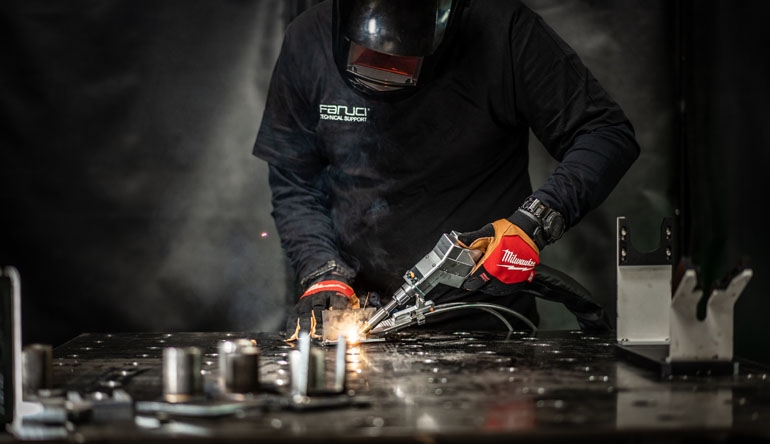
Check: Laser welding - learn about the advantages and challenges of this welding method
What savings does laser welding generate?
Implementing laser welding allows for significant reduction in operating costs, thanks to lower material consumption, acceleration of the welding process, no need for post-process finishing, as well as no need to hire highly qualified welders. Average annual savings from using laser welders include:
Material savings:
-
Welding wire – consumption 10-15% lower than with MIG/MAG.
-
Shielding gas – consumption reduction of up to 30%.
-
Abrasive materials – consumption decrease of 40-50% compared to MIG/MAG.
Greater work efficiency:
-
Welding speed at the level of 80-120 cm/min allows for faster process execution.
Lower service and operating costs:
-
Maintenance – cost about 1,000 EUR/year.
-
Operation – about 900-1,000 EUR/year.
Thanks to these savings, the total annual reduction in operating costs in a manufacturing facility can range from 20,000 to 30,000 PLN.
When will the investment in a laser welder pay off?
Return on investment in a laser welder depends on the scale of production and the scope of its application. In many enterprises, the amortization time is 2 to 3 years. In case of intensive equipment use and a larger number of orders, the return can occur even faster.
When financing laser machine investments, it's worth considering:
-
operational or financial leasing, which allows spreading costs into installments,
-
EU grants for technological innovations, which can cover part of the expenses,
-
installment system, which can be a beneficial solution for larger manufacturing companies.
By investing in a laser welder, the company not only gains savings but also increases production quality, competitiveness, and flexibility in implementing more complex products.
Check how you can finance a new laser welder for your company: Laser machine financing
How to choose the right laser welder?
Purchasing a laser welder is a strategic decision that affects weld quality, operating costs, and production efficiency. Choosing the right model should be based on several key criteria that will guarantee maximum efficiency and device longevity. Important factors include primarily:
-
Equipment quality – durability and precision of welder construction are crucial for its efficiency and longevity. It's worth choosing reputable brands and models where high-quality components are used.
-
Availability of spare parts – quick service response and easy access to necessary components ensure work continuity and minimize production downtime.
-
Technical support – it's good if the supplier offers training and help in technology implementation, which facilitates new equipment implementation and optimization of its use.
Choosing the right laser welder supplier is an investment in quality and stability of production processes, so it's worth spending time analyzing available options and selecting equipment tailored to company needs.
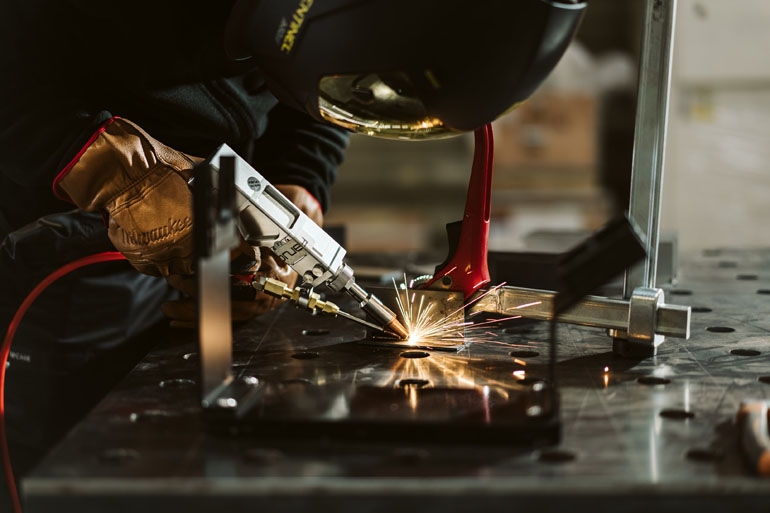
Training employees in laser welder operation – is it a big problem?
One of the common concerns before implementing modern technologies in a company is the need to train personnel. However, in the case of laser welding, this problem practically doesn't exist.
-
Operator training usually takes one day, which means new technology can be implemented very quickly.
-
Operating laser welders is intuitive and doesn't require qualifications – unlike methods such as TIG/MIG and MAG, which require long experience and precise skills.
-
Welder suppliers often offer implementation training, so employees can quickly learn to work with new equipment.
The ease of operation of this technology means that enterprises can introduce laser technology much faster without the need to hire highly qualified specialists.
Summary – When is it worth investing in a laser welder?
To increase efficiency and reduce production costs, it's crucial to eliminate bottlenecks that slow down processes and generate unnecessary expenses. If problems such as insufficient weld quality, high operating costs, or difficulties in acquiring qualified welders appear in your company, investing in a laser welder may be the best solution.
Modern laser welders allow for faster and more precise production than MIG/MAG/TIG methods. Welds are ready immediately after execution, which eliminates the need for additional finishing and reduces material consumption. As a result, operating costs drop significantly, and the production cycle is shortened.
Additionally, operating laser welders is simpler and less demanding, which facilitates training new employees and reduces dependence on experienced welders. Automated control ensures process repeatability, regardless of the operator's experience level.
Is a laser welder a good solution for your company? Schedule a free consultation and check what benefits it can bring to your business.